Book Review: Seraph on the Suwanee, by Zora Neale Hurston

“Putting food on the table” is what both husbands and wives do. In traditional marriages, however, the husband does it figuratively while the wife does it literally. The separateness of these two modes of devotion leads both husbands and wives to feel that they are laboring alone, and both grow resentful.

In Seraph on the Suwanee, the husband, Jim Meserve, makes clear from the outset that his view of marriage is not as an equal partnership. As he conveys “in so many words” to wife-to-be Arvay Henson, “‘Love and marry me and sleep with me. That is all I need you for. Your brains are not sufficient to help me with my work; you can’t think with me. Let’s get this thing straight in the beginning.’” (p. 35) Indeed, Jim’s idea of connubial sex is quite explicit: “‘Sure you was raped, and that ain’t all. You’re going to keep on getting raped.’” (p. 57)

As Arvay is Seraph’s protagonist, the course of her resentment at this type of marriage forms the main thread of the narrative. What’s surprising – or perhaps unsurprising, given a grasp of human nature in all its irony – is how much Jim resents it too:

‘I feel and believe that you do love me, Arvay, but I don’t want that stand-still, hap-hazard kind of love. I’m just as hungry as a dog for a knowing and a doing love. You love like a coward. Don’t take no steps at all. Just stand around and hope for things to happen out right. Unthankful and unknowing like a hog under an accord tree. Eating and grunting with your ears hanging over your eyes, and never even looking up to see where the acorns are coming from. What satisfaction can I get out of that kind of love, Arvay?’ (p. 262)

Adding complexity to this story of resentment is its symbolism, with the “cracker” Arvay representing the Old South and the hustling Jim standing for the New. Perhaps the former, sullen and parochial, can only be dragged forward by the latter, enterprising and propulsive; and perhaps this dragging does not allow for much collaboration or consultation. It’s certainly ironic that a progressive development  – the modernization of the South – should be depicted here in the context of an unprogressive marriage: Arvay finds her liberation in submission, and if any beneficial readjustment of marriage roles takes place, then I must have missed it. It may be that Hurston prizes the social and economic improvement of the South over the raising of the status of women…

…or maybe her point is that the South hasn’t quite changed enough. Otherwise, it’s very strange for Hurston to have painted Jim as such a know-it-all of a husband, only to admit in the end that hubby really does know best.

Book Review: Autobiography of a Female Slave, by Mattie Griffith

This book was actually written in 1856 by a white woman (a Kentucky slave-owner turned abolitionist), which nearly disqualified it for adoption as my Juneteenth reading this year. However, as it is dedicated “to all persons interested in the cause of freedom,” I deemed it not entirely inappropriate.

Like many similar books of the antebellum era, Griffith’s Autobiography seeks to steal a march on slavery’s sugar-coaters by portraying the peculiar institution as the cruel, treacherous, family-destroying inferno it was. Nothing about this portraiture is controversial today, and modern readers will find it unremarkable, as harrowing as it is. Where Griffith may stand out a bit is in the special pains she takes to show that one of the greatest evils of the slave system was its tendency to undermine Christian belief and practice, for blacks –

‘When I dies, I’ll jist lay down and rot like de worms, and dere wont be no white folks to ‘buse me.’

‘No, there will be no white folks to abuse you in heaven; but God and His angels will love you, if you will do well to get there.’

‘I don’t want to go ther, for God is one of the white people, and, in course, he’d beat [us].’ (pp. 208-209)

– as well as for whites:

To impugn the justice of his Maker’s decrees was a common practice with him. He had so long rejoiced in power, and witnessed the uncomplaining vassalage of slaves, that he began to regard himself as the very highest constituted authority! (p. 235)

It may be objected that Griffith, owing, perhaps, to this religious emphasis, devotes excessive attention to white heroes, called sometimes “prophets” (p. 81) whose eyes are “saint-like” (p. 296); but the objection would be inadmissible. In the first place, given that Griffith’s task is necessarily to inspire white redemption, she never diverts from the context of black suffering. One of her book’s dramatic highpoints is the death of the Christlike “young Master,” which not only fails to yield a promised salvation but is paralleled ingeniously with the wretched martyrdom of a blameless slave. In the second place, the supposedly-heroic white people in the Autobiography are really just exhibiting basic decency. One of them admits, “I deserve no thanks for the performance of my duty” (p. 359), and of another benefactor protagonist-narrator Ann declares, “How beautifully she illustrated, in her single life, the holy ministrations of true womanhood!” (p. 347)

With this last point, Griffith is arguing that fairness toward blacks is not only a Christian imperative but a womanly one. Indeed, she makes the case explicitly (and somewhat self-referentially):

Woman, when once she interests herself in the great cause of humanity, goes to work with an ability and ardor that put to shame the colder and slower action of man. The heart and mind co-work, and thus the woman, as if by the dictate of inspiration, will achieve with a single effort the mighty deed, for the attainment of which men spend years in idle planning. Women have done much, and may yet achieve more toward the emancipation and enfranchisement of the world. The historic pages glitter with the noble acts of heroic womanhood, and histories yet unwritten will, I believe, proclaim the good which they shall yet do. Who but the Maid of Orleans rescued her country? Whose hand but woman’s dealt the merited death-blow to one of France’s bloodiest tyrants? In all times, she has been most loyal to the highest good. Woman has ever been brave! She was the instrument of our redemption, and the early watcher at the tomb of our Lord. To her heart the Savior’s doctrine came with a special welcome message. And I now believe that through her agency will yet come the political ransom of the slaves! God grant it, and speed on the blessed day! (pp. 196-197)

To Christianity and womanhood must be added the founding principles of our nation, to round out the trifecta of Griffith’s inspiration:

In no situation, with no flowery disguises, can the revolting institution be made consistent with the free-agency of man, which we all believe to be the Divine gift. We have been and are cruelly oppressed; why may not we come out with our petition of right, and declare ourselves independent? For this were the infant colonies applauded; who then shall inveigh against us for a practice of the same heroism? Every word contained in their admirable Declaration applies to us. (p. 242)

More often than not, though, American ideals – as well as Christian and womanly ones – do not so much inspire as shame, when reality falls short of them. “Give us no more Fourth of July celebrations,” declares Ann, in an especially gloomy moment, “the rather let us have a Venetian oligarchy.” (p. 375) It is mostly as sources of shame that American ideals appear in this 1856 book, driving home the lesson that shame can be an important engine of progress.

Unlike others of her era, Griffith is as egalitarian as she is opposed to slavery. “‘I do not see why Fred Douglas [sic] is not equal to the best man in the land,’” she proclaims from the mouth of a white abolitionist. “‘Might I not (if it were made a question) prefer uniting my sister’s fate with such a man, even though partially black, to seeing her tied to a low fellow, a wine-bibber, a swearer, a villain, who possessed not one cubit of the stature of true manhood, yet had a complexion as white as snow?’” (p. 79)

Finally, Griffith is an elegant writer and a prescient one:

‘Will my death-hour ever come?’ I asked myself despairingly. ‘Have I not tasted of the worst of life? Is not the poisoned cup drained to its last dregs?’

I fancied that I heard a voice answer, as from the clouds.

‘No, there are a few bitterer drops that must yet be drunk. Press the goblet still closer to your lips.’

I shuddered coldly as the last tones of the imagined voice died away upon the soft night air.

‘Is that,’ I cried, ‘a prophet warning? Comes it to me now that I may gird my soul for the approaching warfare? Let me, then, put on my helmet and buckler, and, like a life-tired soldier, rush headlong into the thickest of the fight, praying that the first bullet may prove a friend and drink my blood!’ (p. 327)

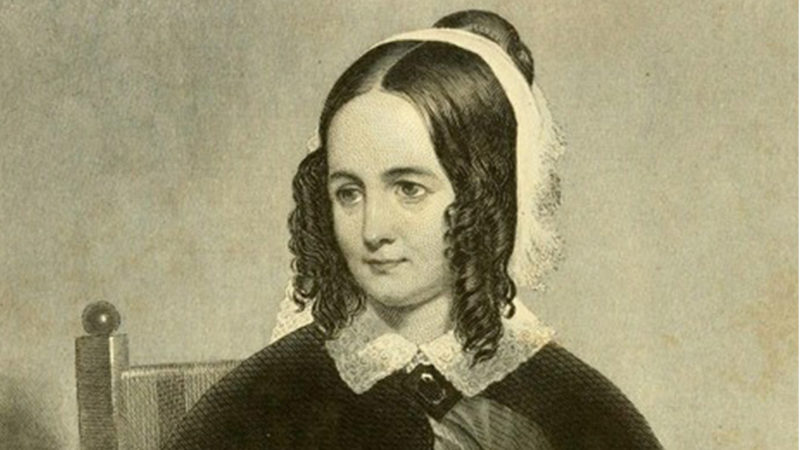
Book Review: Northwood, or Life North and South, by Sarah Josepha Buell Hale

Written in open anticipation of the Civil War, Northwood, or Life North and South (1852) posits basic differences in character between Yankees and Southrons. Some character traits are caused by geography and climate, as in:

The universal necessity for constant labor or application to business, which yet happily exists in the New England States, contributes, perhaps more than any other cause, to preserve the purity of morals which distinguishes the inhabitants of that section of our country. Had the Puritans and their descendants been fed with manna and fattened with quails in their wilderness, they would, doubtless, long before this, have spurned the hand that bestowed the unsought favors. (p. 240)

In some cases, the climatic factor gives way to the social:

‘Your cool climate keeps your temperament cool; and the perfect equality subsisting in your society makes the controlling of the passions more indispensable than with us, where the overflowings of wrath may be poured out on the heads, and bodies too, of unresisting menials.’ (pp. 205-206)

The novel’s protagonist, Sidney Romilly, shifts back and forth between New Hampshire and South Carolina and thus tries both halves of the experiment on himself. The results he relates in a letter to an English friend:

‘As a fair parallel I will mention Napoleon the Great. Like him I was taken from humble life, to be the heir of a sovereignty; make what exceptions you please to my use of the term sovereignty, the southern slaveholder is as absolute in his dominions, or plantation rather, as the grand seignior, and when I had become accustomed to command, and my mind was weakened by indolence and enervated by dissipation, I was suddenly thrown back to my former insignificance, and compelled to dig for my daily bread. “O, what a falling off was there!”…. [However,] the activity which we are compelled by our situation to exert…operates to dispel the gloom of grief. Employment is an excellent comforter, and fatigue the best opiate in the world. I never slept so soundly since my childhood, and my slumbers are most refreshing. I awaken in the morning without any solicitude save just the business of the farm. I have no appointments to keep or engagements to escape, no punctilios of honor or intrigues of love. In short, could I fairly forget the last dozen years of my life, I think I might now enjoy the best felicity of which mortal men can, on earth, be partakers.’ (pp. 324-326)

Northwood’s author, Sarah Josepha Buell Hale, directly addresses the problem of slavery only toward the end of the book. While against the institution – as something that is bad for white people – she is equally against its violent overthrow and rather dreams, somewhat like Gandhi, of a swelling of (Christian) soul force that will compel slave-owners of their own accord to manumit their menials, educate and evangelize them, and then allow them to colonize and Christianize Africa. She holds no belief in racial equality (or amalgamation) and supposes black and white coexistence in America to be impossible.

Otherwise, Northwood is chock-full of little bits of wisdom I’m more prepared to accept. For example, it rebukes me for excessive romanticism by commenting favorably that a certain love-letter “was not an unmeaning rhapsody – alternately fire and frost; now breathing out his affections and now lamenting his destiny”… but rather addressed to the lady “as his friend and therefore entitled to his confidence – as a reasoning being and therefore able to understand his situation and assist him with her counsel.” (p. 207) It chides me too for my regrettable Machiavellian conception of respect, when it quotes Sidney’s report that “‘I am more respected and less feared; better, far better beloved, yet less flattered; have fewer followers and firmer friends.’” (p. 340)

In refutation both of Machiavelli and of the Chinese philosopher Han Fei, it supplies the Christian argument that love is superior to law: “Even God, reverently speaking, could not, by force, compel His rational creatures to be, in heart and soul, obedient to His law. Therefore, He sent His beloved Son to die for us, and thus, by His love, to move us to love, which includes obedience in return.” (p. 394)

Finally, the book has a few things to say about the general struggle between equality and aristocracy. On the one hand, it heralds the bitter reaction of the latter against the former that, in my humble opinion, has given rise to all totalitarian doctrine from Marxism to Nazism and that has constituted the chief driving force of history since the mid-nineteenth century:

‘Neither is it strange that the aristocratical spirit of the old world should be alarmed and revolt at the democratical influence which the new is so rapidly obtaining. We cannot expect those who pride themselves on an ancestry, whose pure blood has flowed through proud veins for many hundred years, will forget at once this fancied superiority, and look on what they call our plebian origin, without feelings of contempt.’

On the other hand – or perhaps on the same hand – these pages also note the development of a pseudo-aristocracy, arising among the plebians, that may, in spite of its origins, exemplify the reaction of the aristocratical spirit against the democratical one:

‘I do think the real English gentleman has more of dignity, and less of arrogance, than our purse-bound citizens. The Englishman is more proud, perhaps, but is free from that puffing consequence which is the most offensive part of the folly in our own countrymen. This may arise from the superiority of the former being established and acknowledged, whereas our own gentlemen are continually striving to maintain their precarious honors, and seem determined, by making the most of what they happen to possess, to indemnify themselves for the transientness of its continuance.’ (pp. 244-245)

It is ultimately the totalitarian, in his twentieth-century guise, who seeks to “maintain precarious honors” and indemnify himself against the transientness of democratical society by reimposing upon it a fixed hierarchial order, with himself at its apex.

In the meantime, the pseudo-aristocrats of Northwood, are described by Hale consistently as people of fashion. Examples of her use of the term are almost beyond counting:

His appearance, rank, and fortune, made his alliance a prize not lightly to be rejected by people of fashion. (p. 182)

Thus gently and almost imperceptibly, Stuart was loosening the chains which fashion had twined around our hero and restoring him to the freedom of that rational enjoyment which his soul was formed to appreciate but for which the Circean cup of luxury had nearly destroyed his relish. (p. 237)

Now he must put forth his own strength and depend on his own exertions. Yet strange as it may seem to those who connect felicity only with wealth, splendor, and distinction, he was never, in the proudest moment of his prosperity, when he was the star of fashion and minion of fortune, so cheerfully and equally happy as now, while confined to labor and living in obscurity. (p. 323)

He whispered to Sidney in great confidence that he fancied Miss Redington’s accession of wealth had already begun to make her dissatisfied with a residence in that unfashionable place and that he presumed she would soon depart for Boston. (p. 332)

I’ve always found fashion to be imposingly hierarchial, a ready means by which even Americans, who lack a true aristocracy, strive to concoct a false one. It’s therefore confirming to see how often Hale presents fashion as the antithesis of New England’s virtuous, egalitarian simplicity.