Call me worrier
I use multi-care toothpaste
And I never smile

Call me worrier
I use multi-care toothpaste
And I never smile
This book is very powerfully and economically written, with poignant understatement sufficing very well. As is known, its main conceit is to take the underground railroad literally, as a subterranean locomotive, as it conveys the runaway Cora through a variety of states of freedom, each with hopes, mysteries, and dangers and each stressing a usually sinister aspect of race relations, involving, to name two examples, medical experimentation and violent segregation.
One splendid sentence is a line of dialogue: “Sometimes a useful delusion is better than a useless truth” (p. 285). A few lines later, America is named as the grandest delusion of all, hopefully a useful one; and since the ending of the story doesn’t involve total genocide, perhaps it might count as a (very relatively) hopeful one.
Most people clean up from the evening’s activities before turning in for the night, but I’ve always preferred to leave things where they are, the better to reconnect with them, and with a slightly younger version of myself, on the morning after. Waking up bright and early to last night’s tea mug, with the damp bag of Sleepytime still in the bottom, reminds me that I was, just a few hours ago, in a mellow world, very different from the up-and-at-‘em condition in which I now find myself. If the Kind of Blue album jacket is still on the floor in front of the stereo, the lesson is all the more powerful. It’s like I’m looking back in time, to a yesterday that is psychologically ages ago.
Sunday night to Monday morning transitions are the most striking, and if the detritus of the weekend is still in place, I find I’m beside myself in a time-traveling sense. Cards and poker chips, beer and pretzels stare up at me from the table, stare forward at me, through time, from the weekend. If today is the first day of the school year, and last night’s Uno game is still in situ, then it calls to me across an even greater distance, from my carefree to my care-burdened self.
The just-passed hurricane reaches out to me too, from flashlights and candles gathered in the dining room, now bathed in the ironic light, and the silence, of the morning after. Of course, I don’t long for the storm as I would for the summer, but I long even so.
Once, in fact, I was able to commune, not just with my late self but with a late friend, through the medium of leftover spaghetti sauce. She’d cooked a batch of it before going home to hang herself, and we ladled it onto our plates for weeks.
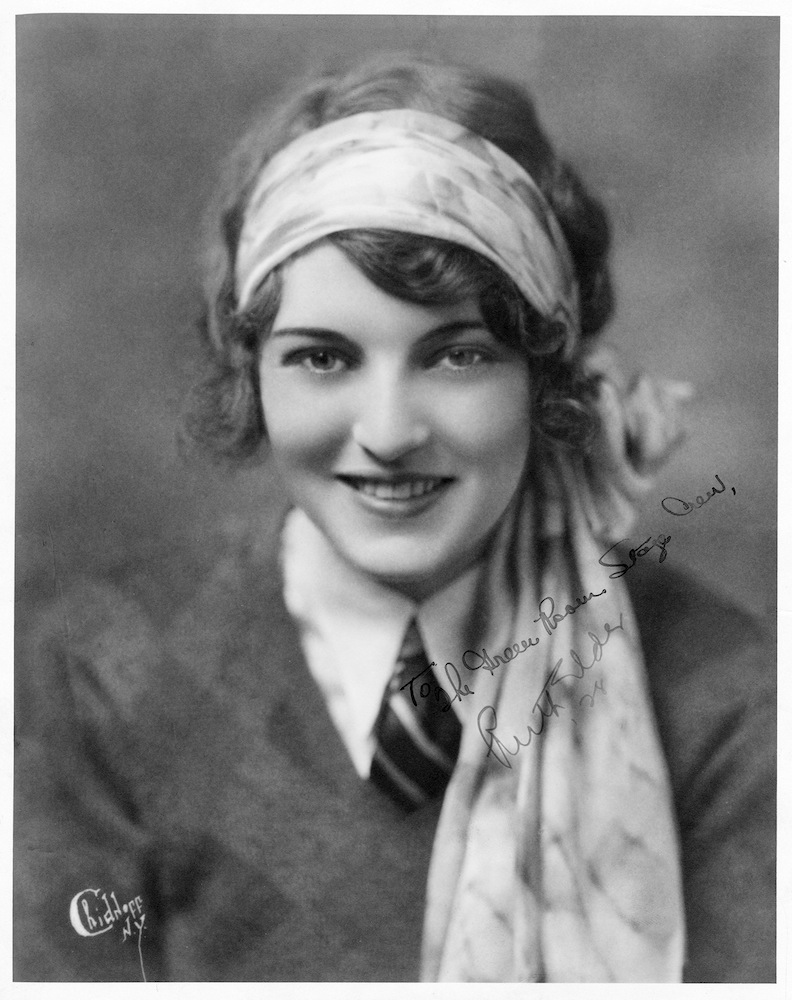
Laurie Notaro’s Crossing the Horizon promises a tale of “three remarkable women” (https://www.youtube.com/watch?v=Kan7FDWhDcc), but one of its three main subjects, Mabel Boll, doesn’t belong with the other two. Granted, Ms. Boll was one of at least three women who hoped to cross the Atlantic before Amelia Earhart did. However, she was not herself a pilot (she would have made the trip only as a passenger) and comes off in these pages as a frivolous socialite and gossip. She might have been remarkably witty, but she wears out her welcome halfway through the book and is tolerable after that only as comic relief. If there is any lesson in her story it would be that her dependence on other people to realize her dream proves fatal to her chances: Anyone with any merit runs as fast as he can in the opposite direction, leaving her in the rotten company she more commonly keeps (especially the scoundrel Charles Levine), with everyone trying to take advantage of everyone else and no one really helping.
Notaro’s other two protagonists, Ruth Elder and Elsie Mackay, are the true heroes. Both are addicted to freedom and stop at nothing in the pursuit of it. Both run away from home, eloping with men who seem to offer fresher prospects – though neither one does, and both women return to their families. Both are enamored of fast cars and aeroplanes and quickly obtain pilot’s licenses. Both are inspired to follow in Charles Lindbergh’s footsteps and set their sights on the Atlantic, although they plan to cross in opposite directions – the American Elder flying east and the British Mackay flying west.
In fact, there are at least as many interesting differences between the two heroes, beside their proposed directions of travel. Elder, of Anniston, Alabama, is supported by her family in her transatlantic endeavor, while suffering at least some measure of opposition from society. It is Ruth’s mother who dresses her in a necktie and trousers, and all her relations turn out for her flight. (This reviewer is also extremely pleased that Elder’s family is not depicted here as a pack of cartoonish hicks.) However, the press seems a bit too preoccupied with the question of Ruth’s husband, and one reporter says that she’d do better as a typist. Even Eleanor Roosevelt calls her ambition “very foolish.” Conversely, Mackay is the favored daughter of aristocrats who, owing to overprotection, forbid her from making the crossing. It cannot be said for sure how much society in general would have supported her plan, for she keeps it a secret; but she seems generally to get her way in the world, and her crew is quite devoted to her.
Nothing stops either woman, of course, but the edge would have to go to Ruth Elder for her pluck at making things happen. True, most doors open for her because of her winning looks. Conscious of this advantage, she employs her lipstick and her smile strategically. However, her pretty face can get her only so far. When the world stops taking her seriously (if it ever did take her seriously) and the doors slam shut, she is forced to rely on her intelligence, her voice, and her ability to prevail in argument.
The turning point of the book comes when a smart-aleck reporter discovers her husband.
“Mister,” Ruth demanded, pointing at the young reporter who thought he had just scooped everyone. “You, sir. What is your name?”
He looked shocked and surprised and pointed to himself. “Me?” he asked, and Ruth nodded. “Dan Shear. Jersey Journal.”
Ruth nodded again and put her hands behind her back.
“Mr. Shear, have you ever been to Anniston, Alabama?” she asked without a trace of malice, but not sweetly, either.
“Can’t say that I have,” he said with a snarky laugh.
“Well, I am from Anniston, Alabama, and I am the second of seven children. Eight if you count my little brother who died when I was ten,” she said.
After revealing more of where she’s from, way more than the reporter bargained for, she asks,
“Do you know that kind of living, Mr. Shear?”
“That wasn’t my question,” he stammered. “My question was–”
“Well, this is my question to you, Mr. Shear,” Ruth interrupted. “Do you know what that kind of living is like? For a seventeen-year-old girl in Anniston, Alabama?”
“No, Miss Elder, I do not,” he finally admitted.
“Now you do,” Ruth stated firmly. “So you can stop asking those questions….My name is Ruth Elder and being married makes no difference in how I fly that plane. It doesn’t make me better or worse. It doesn’t change a thing.” (pp. 199-200)
There’s a lot of waiting around for favorable weather, but Ruth Elder and Elsie Mackay end up flying their planes.
Seated at the next table today at China Doll were three long-retired airline pilots who were reminiscing in loud voices on airsickness of days past. They seemed to think that “regurgitate” was more acceptable table talk than “vomit” or “puke;” and thus they droned on, in sentences such as “I started to feel sick, but I didn’t regurgitate. It wasn’t until we got closer to New York that I regurgitated.”
That was going on next to us. Above us was the only PA speaker in the ceiling, and it was raining down muzak versions of “Lost in Love” and comparable classics, directly onto our food.
Despite the excellent preparation of the eggplant with garlic sauce, I found it difficult to enjoy my meal. In fact, I felt as though my whole world was melting into a swirling morass of tossed cookies and lost love, Eastern Airlines, air sickness bags, eggplant and garlic sauce. Today’s luncheon was, in the words of Mark Twain, “tedious and wretched and dismal and nasty.”
Yonghe, Taiwan, ROC October 25, 1990
It’s been several weeks since I’ve had the occasion to awaken to the sounds of a pleasant morning shower. The patter of the rain greeted my waking ears like the voice of some old friend, missed but not forgotten, and now that nature has returned to her friendly post and benignly discouraged us from our desperate enterprises, I can once more be sated with my own place, this little room, with only a gentle heartbeat audible outside, and the clamorous exertions of the organism thus muted.
Perhaps it is necessary to be reminded that we can be serene. I’ve always loved the heaven-sent power outage or even the tropical storm; it keeps one’s perspective natural, manageable, under one’s own roof. I know I can trust myself in that shelter to keep myself dry, safe, and enheartened.
But hark, across the airway, not far at all, even in the rain, I can still hear the unpacified and oblivious father, coarsely ordering things about in his own little world, just as on any other day. For him, I imagine, there is not even the briefest repose from his contrived vicissitudes — or relationships. Owing to this man’s command or frown, the child’s forced piano playing now comes plodding across, right on schedule. Venomous parental commentary forms the background score.
And alas, there are a few crying babies, families who bring the street noise in with them, and motorcyclists keeping their dates. Yet as for me, the clouds suffice to block out the illusion of time, and, liberated from the unnatural schedule of the sun, my heart beats in relaxed tempo with the patter of the rain, constant, though often picking up and tapering off, following the currents of my interest.
Taipei, Taiwan, ROC August 30, 1990
Hearkening back to the treasured, yearned-for “snow days” of grade school, today’s typhoon day seems now to be even a greater surprise and pleasure, simply because it was so unexpected as to be not yearned for at all. The day has been passed amiably here in Yonghe, with the first house meal cooked by housers from the ground up, as well as a great deal of newspaper reading and a three hour nap.
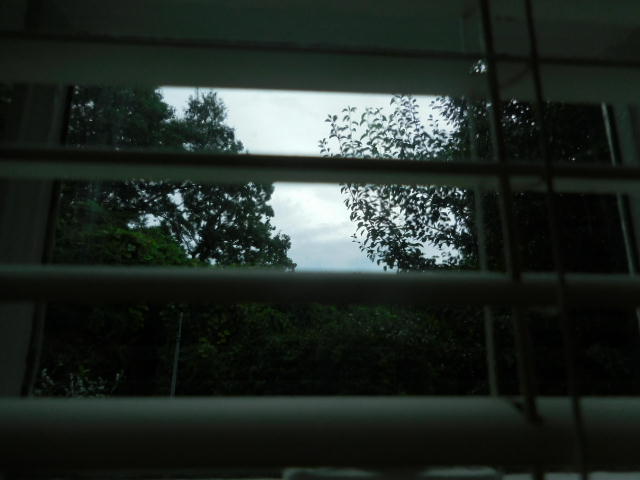
Looking out the window, I’m amazed that there can be so much water anywhere in the world, let alone falling out of the sky. Scores of aerial funnels run off of the corrugated fiberglass roofs and window-covers of the buildings across the alley, as though the apartments were sweating profusely or otherwise manufacturing the unbelievable quantities of the stuff in some interior factory or workshop.The rain is as a curtain, or rather an endless series of curtains (hanging across, parallel, perpendicular, at every conceivable angle to me) when in the atmosphere, before it touches or piles up against anything. In contact with the earth (or under the circumstances, itself), it is a pulsating, translucent force that laps and spits through gutters and drains, or slides off rocks. Reclining in bed after my 3-hour nap, I wondered about the one (or two or three) drops in this vast world of rain that would somehow be blown horizontally by the occasional gust of wind, blown through my window garden, penetrating my screen and flying underneath the billowing curtain, to land, or to touch, as a soft waft of moisture, my legs, arms, and face.
I was stirred to attempt a poem, following the above line of verbal reasoning. My thoughts turned to a sonnet tempo and then began to examine different questions of perspective: Should I be lying down, feeling the moisture coming through the window under the billowing curtain, or should I be kneeling at the window, observing the deluge outside. Although I’d been doing both all day (as well as walking in it and ignoring it), it seemed too dynamic to include both postures in a poem that would have best been a static vignette. Fumbling with the moral of the poem (one referring to poetry itself, preferably) proved to be my ultimate undoing.
I suppose poetic states of mind should accommodate the flow of words and feelings, though not necessarily of stimuli. It seems I’m better at describing natural events with a natural [illegible].
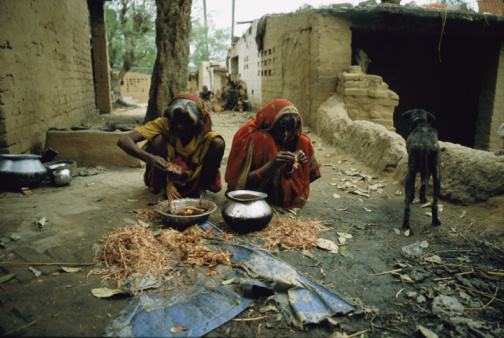
In capturing the Indian caste system in all its wretchedness, Sujatha Gidla’s Ants Among Elephants comes close to a depiction of hell. The reader will come away from this book with an enhanced religiosity, in that he will thank God that he was not born an outcaste in India.
Ants Among Elephants narrates the trials and tribulations of the author’s maternal ancestors in the mid-twentieth century. The two most prominent characters are the author’s mother, Manjula, and uncle, Satyam. The latter becomes a leading Communist in Andhra Pradesh, in India’s southeast, an understandable decision, given the rottenness of the status quo as highlighted in these pages. Indeed, the treatment of Satyam’s career in this book is rather undiluted propaganda, of the type this reviewer has often seen in accounts of the revolution in China. The power structure is shown to be so wantonly exploitative that the reader finds himself forced to agree that any effort to overthrow it – nay, to exterminate its members and appropriate their property – is justifiable. In Ants Among Elephants, this pattern is established early in the case of the Nizam’s regime in Telangana, where the custom of vetti made every citizen liable to the arbitrary demands of the dora class of overlords (p. 42). Gidla lets slip the fact that, after Independence and the annexation of Telangana by the Indian army, the vetti system was abolished; yet this victory is not admitted here to have been enough, for the army repossessed land that peasants had appropriated and restored it to its former owners (p. 60). Therefore, the struggle must go on, not to stop when the peasants achieve only “freedom from bondage” but to continue until they win “land” and “dignity” (p. 50).
If the chapters on Satyam are political, those focusing on Manjula are personal and therefore more satisfying. They also are better guides to the myriad oppressions suffered by the Indian people, far beyond the simple dynamic of landlord vs. peasant, the preoccupation of the Communists. The central fact of Indian society is its state of division. A typical passage reads:
Every girl in the hostel belonged to a clique. North Indians bullied south Indians and never mingled with them. There were separate messes for north and south. North Indians wouldn’t go to the south-Indian mess while south Indians wouldn’t dare set foot in the north-Indian one.
Within both north and south were subcliques based on language. (pp. 189-190)
The fragmentation never works out in Manjula’s favor. Even when she would seem to be with her own people, she is shunned and exploited, largely because she is a woman, with reputation-wasting snares strewn before her, but also owing to any number of reasons related to caste.
Interestingly, Manjula’s academic successes – she ends up with a Master’s degree – offer very little in the way of liberation from her miserable condition. The Indian reality shown here is very different from the Chinese, in which education separates the rulers from the ruled, so that the occasional peasant who earns an academic degree is transformed instantaneously into a mandarin or commissar; and in America, too, education is believed to be the key to general advancement. In Manjula’s case, her Master’s degree makes her technically eligible for certain teaching jobs, but her position at the bottom of society is irredeemable, and the economic advantages are nearly meaningless. The following sort of episode occurs in the book more than once:
On her way to the library one morning, Manjula was accosted by the history department’s peon [Of course! Why wouldn’t the history department have a peon?]. He told her the head of the department wanted to see her.
Professor R.S. Tripathi was old and doddering, but his renown as a historian was such that he was welcome to keep his position at the university as long as he liked. Inside his office, Manjula saw her own instructor, Professor Pathak, sitting to one side with a broad smile on his face. He proudly introduced Manjula as the most brilliant student in his class.
As Professor Tripathi gazed at her, his face darkened; his eyes shrank into black slits. He was revolted by the sight of Manjula. One look at her and he knew she was poor and untouchable….
‘She is the one I told you of,’ Pathak explained. ‘You wanted to meet her.’ But Tripathi merely stared at her coldly and said nothing. Humiliated, Manjula excused herself. (pp. 191-192)
A mind, and an education, is a terrible thing to waste on an outcaste, apparently.
Beyond the degradation of the caste system, Manjula also faces Neanderthal sexism (apologies to Neanderthals for the association). While the men in her family are pampered – her communist brother and man of the people Satyam cannot even button his own shirt – Manjula is essentially a slave. Malnourished and about to give birth to her third child, she is chided by her mother in law for being slow to make her husband a cup of tea; her husband, encouraged by his mother, throws the tea out the window, just after we have seen him throw a radio at her (pp. 242-243). Toward the end of the book, with her Master’s in hand and her family situation finally stable, she is as bad off as she ever was:
Since she and her husband now both had permanent jobs and regular incomes, Manjula had entertained a hope that their financial troubles would finally go away. But that, too, never happened. In Kakinada, she lived as married women commonly do, not only with her husband and his mother and brother, but also his uncles, aunts, cousins, and their spouses and children. At any given time some twenty to twenty-five people lived in two adjoining houses, and as no one else except her, her husband, and her husband’s brother, Percy, was educated and employed, the others all lived off those three salaries. Although the cooking was done by each family separately, when Manjula was at work, the other families would come and pillage her kitchen for rice, lentils, tamarind, chili powder, cooking oil, and kerosene. If they couldn’t find what they wanted, they went to the grocer’s and put it under her account. They stole her saris and bedsheets from the clothesline. (p. 293)
Even the animal kingdom seems to be against her. At one point, after moving to an apparently comfortable lodging, Manjula and her children are attacked by a cohort of monkeys. Henceforth, they must schedule their activities, particularly food handling, so as not to coincide with the primates’ incursions. (pp. 278-279)
I recommend this book for its educational value. Then, after you are finished reading it, I recommend listening to a lot of Beach Boys and thanking God for the lives that we have.
A sunny Sunday is too much of a challenge for me. A grey one makes it easier to stay home and veg out with a clear conscience.
Taipei, Taiwan, ROC Nov. 3, 1989
A flirting accomplice at the office — everyone knows her as Nancy — shared a few moments with me in the copy room. She suggested the two of us save up some bread and then go to South Africa together. When I proposed a mere movie instead, she laughed with embarrassment and was unable to say another word.



 Yellow Crane in the Rain