How I Wrote Meet Me at the RASCAL

First, I created the basic text by translating into English parts of the Chinese anecdotal source “Yushan yao luan zhi” (“Treachery at Yushan”), by Feng Shu (1593-1645). Here are two sentences from this basic text:

True to what her cousin had told her, Chief Eunuch Wei Zhongxian was then at the height of his influence. On Tiger Hill, in Suzhou, the Puhui Shrine was being built in his honor.

Next, I transplanted the basic text to contemporary and near-future America, resulting in the Baltimore text, named for the city I chose to be the main characters’ American hometown (although not all the action takes place there). Here is the Baltimore version of the two sentences shown above:

True to what her cousin had told her, the current Director of the FBI, a eunuch called King Kong, was then at the height of his influence. In Philadelphia’s Fairmount Park, King Kong Coliseum was being built in his honor.

Then, I subjected the Baltimore Text to a process called larding, meaning that I inserted one new sentence between every two sentences already there. Larding is one of the many literary exercises favored by the Oulipo coterie of experimental writers. (See Harry Mathews’ Oulipo Compendium for a full description of larding.) I larded the Baltimore text a total of three times. After the first round, our two sample sentences were now three, and they looked like this (the inserted sentence is italicized):

True to what her cousin had told her, the current Director of the FBI, a eunuch called King Kong, was then at the height of his influence. Eunuchs like King Kong had capitalized on the great demand for their employment in both the private and public sectors, where they reduced the risk of costly sexual harassment lawsuits. In Philadelphia’s Fairmount Park, King Kong Coliseum was being built in his honor.

After the second round of larding, the resulting five-sentence passage (with the inserted sentences italicized) read as follows:

True to what her cousin had told her, the current Director of the FBI, a eunuch called King Kong, was then at the height of his influence. He had, in fact, just been named person of the year by Time Magazine. Eunuchs like King Kong had capitalized on the great demand for their employment in both the private and public sectors, where they reduced the risk of costly sexual harassment lawsuits. The trendsetter in this regard had been media scion Pharaoh Weinstein, whose self-castration on live MeToo TV had inspired young Kong (then known by his rapist name of Mahatma Montessori) to choose the gelded path to power. In Philadelphia’s Fairmount Park, King Kong Coliseum was being built in his honor.

With the third round of larding (again highlighted in italics), RASCAL assumed its final density, as shown in our sample:

True to what her cousin had told her, the current Director of the FBI, a eunuch called King Kong, was then at the height of his influence. The name King Kong would later figure prominently in accounts of America’s decline, but during his own time he commanded respect and no one deemed his rise improper. He had, in fact, just been named person of the year by Time Magazine. His autobiography, More Balls Than Most, sat immobile atop the New York Times bestseller list, where it dominated both the political and inspirational genres. Eunuchs like King Kong had capitalized on the great demand for their employment in both the private and public sectors, where they reduced the risk of costly sexual harassment lawsuits. (The final liquidation of the Catholic Church in a class-action settlement served as the wake-up call.) The trendsetter in this regard had been media scion Pharaoh Weinstein, whose self-castration on live MeToo TV had inspired young Kong (then known by his rapist name of Mahatma Montessori) to choose the gelded path to power. Kong’s career, in a few short presidential administrations, led him to his current commanding position in the Bureau.

In Philadelphia’s Fairmount Park, King Kong Coliseum was being built in his honor.

By the numbers (according to textfixer.com): The Baltimore text contained 371 sentences, which grew into 729, then 1407, and finally 2777, with each round of larding. Between every two sentences of the Baltimore text, there are seven in the completed RASCAL.

Stylistically, the hardest thing about larding is that each new sentence will separate two sentences that belong together, so that the effect on the text is damaging. A writer seeking merely to mitigate the damage would labor to make each new sentence a general nullity, so that nothing of substance is interposed between the ideally consecutive sentences of the original. On the other hand, if the writer, accepting the challenge of the experiment, wishes to transform the damage into an improvement, then he must craft each new sentence to contain either amusing embellishment or wholly new material that follows naturally from the previous sentence while leading seamlessly to the following one. The new sentence, therefore, loops off in a (hopefully) interesting direction before returning to the original thread of the text. The Oulipo exercise of larding is like being forced to use an extension cord to plug in a lamp that is already right next to the electrical socket. One can try to hide the extension cord (or in this case seven extension cords), or one can make it artistically pleasing enough, perhaps by tinkering it into a string of Christmas lights, to count as an important part of the overall décor.

Book Review: Farnsworth’s Classical English Style, by Ward Farnsworth

The main argument made in Farnsworth’s Classical English Style is that good writing involves the balancing of contrasts. Many of these contrasts are rhythmic, and one good way to vary rhythmic flow, treated extensively in the first part of Farnsworth’s book, is to set off polysyllabic Latinate words from monosyllabic Saxon ones. Other contrasts that distinguish good writing are those between abstract and concrete imagery and front-loaded and back-loaded sentences. Farnsworth’s general watchword, however, is variation.  

This stress on ebb and flow as a hallmark of good prose counts as a rebuke to the modern arbiters of style who have instilled in recent generations of writers the imperative always to compress and economize. While efficiency in writing is certainly an object, Farnsworth argues, it should not be pursued to monotonous extremes. Doing so, he laments, is like removing some of the instruments – long words, long sentences, and formal language – from the orchestra a writer conducts, altogether a “rhetorical misfortune.” (pp. xiv-xv) In another musical simile, Farnsworth asserts that “skilled writers, like musicians, don’t always play at the same speed.” (p. 12) Summing up the rule of variation, Farnsworth notes:

Good writing has variety in the sounds that it makes, in whether it is more or less refined, in whether it is abstract or concrete, and in whether it appeals to the heart or mind. All those variations create rhetorical energy that can be put to various uses, as by enabling a writing or a speech to convince, inspire, or scathe. (p. 12)

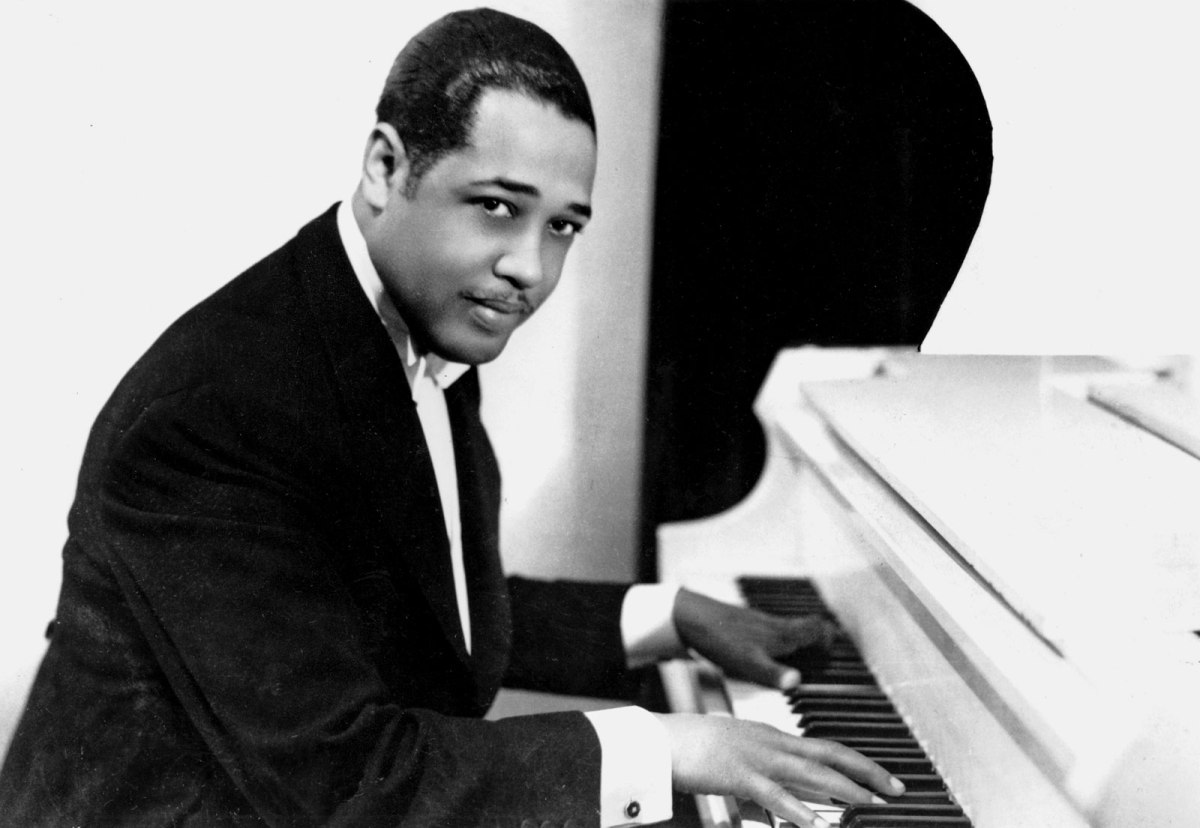
As easily as I’m convinced by Farnsworth’s argument, and as illuminating as I find his book, I am almost sorry I read it. To maintain the musical analogy: We should simply recall the words of Duke Ellington – “If it sounds good, it is good” – and be confident that the goodness of a piece of writing is self-evident. I would hate to lose my instinct for a pleasing cadence while self-consciously debating between the anapestic and the dactylic. I guess the important thing is to be clear about how the book is to be used (maybe “approached” would have been a better word). Farnsworth’s is a pleasure to read, and the examples of good writing it provides may establish themselves in the reader’s mind in such a way as to inform, subliminally, his choices as a writer; but its terminologies, while helpful for purposes of discussion, will be of no aid to creativity. “If I Fell” is a catchy Beatles song, in part because of the tritone substitution in its intro, but John Lennon didn’t necessarily know what a tritone substitution was, much less read about it in a reference book and decide to write a song with one. Such a notion is – how should I put it? – risible, nonsensical, horseshit.  (I wanted a parenthetical interrupter with a strong Saxon finish.)

This is a good book.

Book Review: Amadis of Gaul, Books III & IV

I read the Place and Behm translation, which puts Books I and II in Volume One and Books III and IV in Volume Two. I waited over a year between volumes. As a result, I forgot what had contributed to the main conflict narrated in Volume Two, and I also forgot many of the characters, especially the many whose names begin with G. I would advise readers to tackle the whole thing straight through, if possible.

Volume Two drags. There is a lot of preparation for the Big Battle, and the pacing is quite slow during the preparation. The beginning, covering Amadis’s eastern adventures, and the end, covering a couple of extra adventures, are the most exciting parts.

One thing that continues to strike me about chivalric literature is the paucity of emotional narration accompanying dialogue (or action). One example is:

“Beware, sire, for you are committing great cruelty and a great sin, and very quickly you could receive such a lashing from the Lord on high that your great brilliance and fame might be greatly obscured….”

“Good uncle,” said the king, “I well remember all that you have said to me before, but I cannot do anything more….”

“Then, sire,” said the count, “I ask of you permission to leave for my own estate.”

“God be with you,” said the king. (p. 281)

One might have expected the king to “redden” or “bristle” as he is reprimanded and abandoned by one of his vassals (his own uncle, no less), or for the narration to spare a phrase or two to convey his feelings. However, the sixteenth-century text, like many others of the time, remains minimalist and leaves the psychoanalyzing to the reader. Perhaps the emotional narration is absent when the emotion should be obvious.

On the other hand, when emotion is not discernible from a character’s speech or behavior – as usually occurs when the character’s speech is counterfeit or his behavior ironic – the omniscient narrator does intervene. For example, after a certain knight loses a battle and is then treated cordially by his former foes, he dutifully returns the cordiality; but he is inwardly angry, for, as the narrator explains:

He was not satisfied in his desire, because all this honor and gain had come to him after being overcome and reduced to dire straits….He consoled himself and dissimulated as a man of great prudence so that no one might perceive that his thought was concerned with anything other than considering himself the lord and superior of everyone, and believing that with great honor he had won it. So with this pretended joy and with a very complacent appearance he came to where the queen was. (pp. 565-566)

In sum, the omniscient narrator only appears when there is a mismatch between appearance and reality. He is a guide only to what is hidden. If nothing is consciously being hidden, then his services are unnecessary. Unless otherwise stated, then, all is as it seems.

By way of comparison, Thomas Malory, who was active a full century earlier than Garci Rodriguez de Montalvo (the compiler of Amadis), did not, I recall, employ omniscient narration in such a way. In fact, Malory’s more consistent disinclination to explain his characters’ actions leaves a great deal of very pleasant work in the hands of the reader, as he is compelled to supply motives and draw lessons from Malory’s often mysterious, bare-bones narration. My conclusion is that Malory is more of a puzzle than Montalvo, more challenging and perhaps, therefore, more rewarding.

From the Black Creek River to the Grand Canal

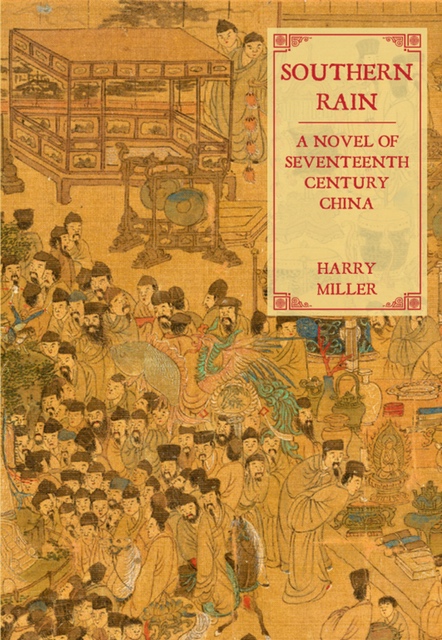
The episode with the Mississippi egrets described in my last posting was incorporated into my novel, Southern Rain, now available via Kindle and at selected bookshops in Taiwan, Hong Kong, and Singapore; it is also available for pre-order, in advance of the general release of the print version in January.

The appearance of the Mississippi egrets, transposed into Chinese cranes, foreshadows the meeting of the hero, Ouyang Nanyu, and the heroine, Ouyang Daosheng.

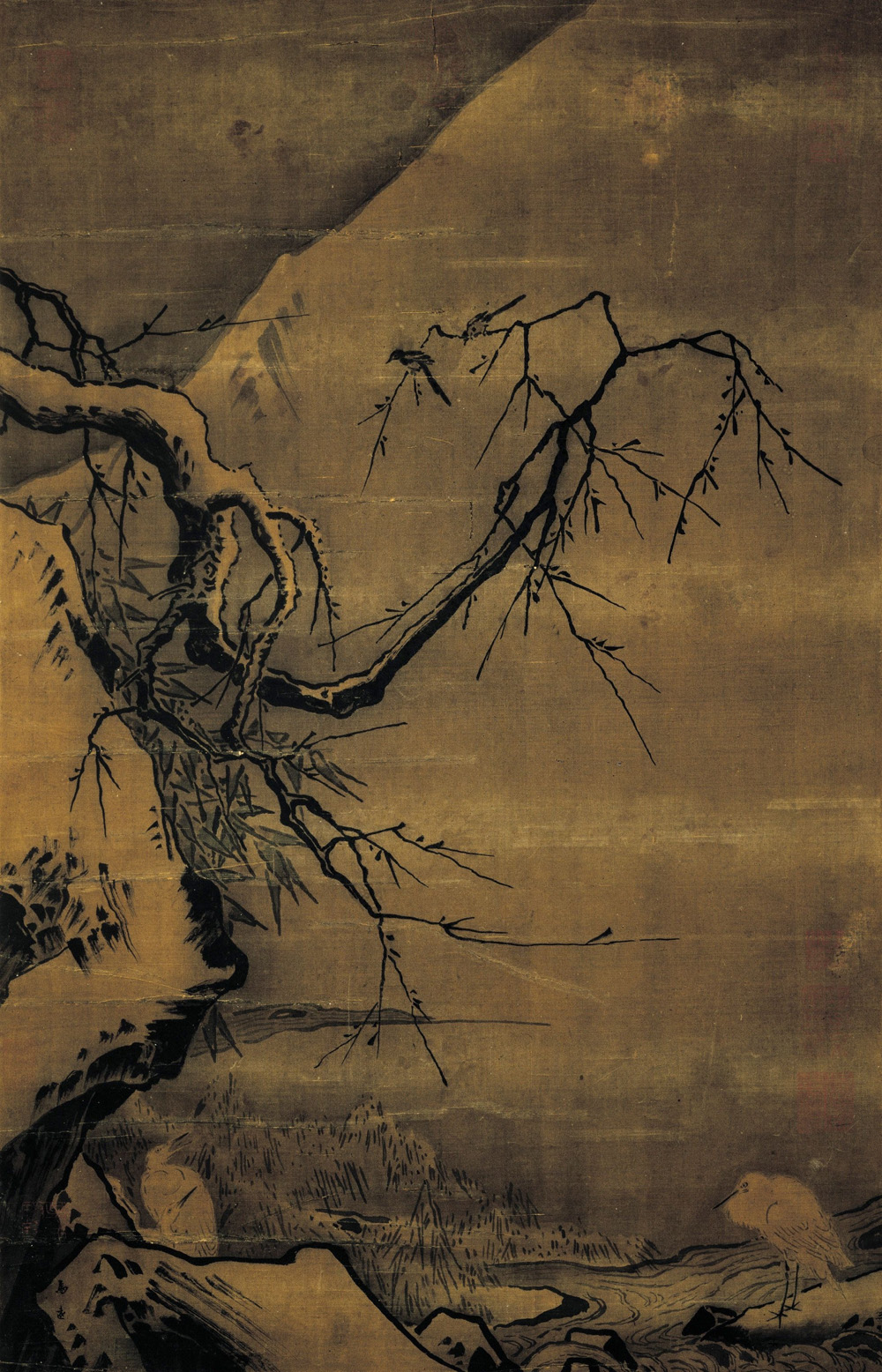
Just beyond a tributary called Witch Mountain Spring, Nanyu noticed two white cranes flying upstream and then perching on the embankment. When the boat drew close to them, they took off again, swooping on ahead, before coming to a new resting place at the side of the Canal. Nanyu reckoned that the cranes moved ten times this way over the course of an hour—leading and waiting, leading and waiting—as though luring him ever onward. They didn’t seem to be feeding, and if they were migrating north, Nanyu wondered why they didn’t just get on with it, without waiting for him to catch up. If they wanted to stay on the Canal but were afraid of the boat, then why didn’t they fly to the side, to allow it to pass? For the rest of the day, Nanyu was sometimes invited to share food, sometimes asked for help maneuvering through a lock, and then, he would forget about the cranes; but whenever his activities were finished, he’d look up and there they would be, still scouting out the route.

Nanyu continued to see them after he closed his eyes that night, but in the morning, they were gone.

Image

Writer’s Interview

Having recently infiltrated the Mobile (Alabama) Writers Guild, I was asked to complete the following interview form. The result is somewhat arch; so I’ve decided to post it here. 

Name: Harry Miller

Facebook/Twitter/Social Media:

yellowcraneintherain.blog

(I’m also on Facebook)

Anything published?

State versus Gentry in Late Ming Dynasty China, 1572-1644

State versus Gentry in Early Qing Dynasty China, 1644-1699

The Gongyang Commentary on the Spring and Autumn Annals (A Full Translation)

When did you start writing?

When did you first realize you wanted to be a writer?

Why did you start writing?, etc.

I began writing in middle school, because it was required of me by my teachers. The latter praised what I had written, and I accepted their praise, proud to be considered a good writer. Apparently, the quest for external validation has always been my chief motivation as a scribbler.

At any rate, with my pretentions thus encouraged, my literary endeavors soon went beyond class assignments. I kept a diary in the tenth grade and have occasionally revisited journal-writing since graduating from college, especially during discrete life experiences such as periods of overseas adventure, including a stint in Taiwan from 1988 to 1992. I also wrote many letters, in the last decade or so before letter-writing became obsolete.

Though I gave no thought to the process of choosing a profession before turning twenty six, I always wanted to be a writer of some kind, even if only as an amateur. I was particularly inspired by historians such as C.V. Wedgwood and Francis Parkman, and I dreamed of creating monumental works like theirs. In my late twenties, finding amateurism, too, to be a thing of the past and sensing that it was time to put up or shut up, as far as my dreams were concerned, I committed myself to the academic career path, reasoning that it would offer the most practical chance of realizing them. Putting my college major and post-graduate experience (and language ability) to use, I selected Chinese history as my area of expertise.

After twenty years of credentialing myself academically and establishing myself professionally, during which time I also started a family, I have accomplished my ambition by authoring three historical epics (listed above), which are very well thought of by the twenty or so people who have read them.

In search of a larger audience, I have turned to historical fiction. My first historical novel, Southern Rain, tells the story of an ordinary young man and an extraordinary young woman in seventeenth-century China, who struggle to get and stay together in the face of cultural and political obstacles. It explores the relationships between men and women and freedom and power, against the backdrop of dynastic upheaval. I have tried to make it not only historically realistic but also accessible and engaging to the general reader. The book has been accepted for publication by Earnshaw Books, and I’m quite happy that it’ll be out there soon – in paperback, no less!

Beyond Southern Rain, I’ve got a few more ideas in me. For example, I’d like to translate an account of a creepy family from seventeenth-century China into English and then transplant it to Renaissance Italy. There’re also several straight translations from Chinese and Japanese that I wish to undertake.

How long does it take you to write a book?

About two years.

What is your work schedule like when you’re writing?

I work in the mornings, on days when I am not teaching.

Do you ever experience writer’s block?

If something is giving me trouble, it may bother me for a day and a night, but the “bother” is usually just my mind solving the problem. In Southern Rain, for example, I didn’t want the heroine, Ouyang Daosheng, to have bound feet. After obsessing over the matter for a while (and consulting a few other historians), I determined that an upbringing in a nunnery would probably have spared her the agony.

How do books get published?

I don’t know how other authors’ books get published. Mine get published by the grace of God.

Where do you get your information or ideas for your books?

From Chinese history. The climatic episode of Southern Rain is a historical event from 1645, of which I learned while researching my second book.

Do you work with an outline, or just write?

I just write. The outline takes shape in my head.

When did you write your first book and how old were you?

State versus Gentry in the Late Ming came out in 2009. I was 43.

What do you like the most about writing?

Getting it right. It’s torture until then, euphoria afterward.

What do you like to do when you’re not writing?

Canoeing, reading, music, movies, and sleeping.

What does your family think of your writing?

My mom and brother seem to like Southern Rain.

What do your friends think of your writing?

My friends love my writing (letters, etc.), but none has read any of my books, no doubt because they are put off by the supposedly alien nature of the subject matter (China).

What has been the toughest criticism given to you as an author? What has been the best compliment?

The worst criticism a reader can give is that he doesn’t understand what I’ve written, which means that I’ve failed as a writer. The best compliment is “You’re a great writer.”

Is anything in your work based on real life experiences or purely all imagination?

Some of the settings in Southern Rain are based on places I’ve visited. The protagonist’s house in Nanjing, for example, is based on a place where I used to eat (which was someone’s house). I’ve traveled on the Grand Canal in China, which helped me visualize my characters’ travels by the same method in my book.

As for the characters of Southern Rain, the male protagonist, Ouyang Nanyu, I suppose may be based on me; and Ouyang Daosheng may be a composite of every woman I’ve known – for all I know.

Do you plan on making a career out of writing?

Since I obtained tenure by publishing, I’m happy to say that I already have.

What is your favorite type of book to read?

I like to read histories, novels, historical novels, and books on contemporary issues (such as law), in turn.

What was the last book you read?

Pride and Prejudice

What is currently on your to read list?

The Pendragon Legend, by Antal Szerb

What do you listen to when you write?

Nothing.

What is your favorite music?

The Beatles (though they’ve been going in and out of style, with me)

What is your favorite quote?

“As I hung upon the rail I occasionally turned to watch the captain and the mates who were motioning and swearing in all directions until no one knew his own business.”

— Stephen Crane, “Dan Emmonds”

What is your favorite candy?

A Japanese white chocolate wafer called Shiroi Koibito – “The White Lover”

What would I find in your refrigerator right now?

Acai juice

Have you ever played patty cake?

I play it all the time, with the gentleman who mows my lawn.

Have you ever gone out in public with your shirt on backwards, or your slippers on, and when realizing it, just said screw it?

Shirt on backwards and slippers on is overdressed for me.

Do you go out of your way to kill bugs? Are there any that make you screech and hide?

I don’t kill bugs, except, occasionally, for cockroaches. In Taiwan, where cockroaches are the size of lobsters, the only way to kill them is by pounding them with your fist, upon detection. If you run to get a newspaper or something, he’ll be gone by the time you return. I got pretty good at it.

Is there anything unique about you that you’d like for us to know?

I am the only person in the world with no unique qualities.

Is there anything that you would like to say to your readers and fans?

Where are you?