Book Review: Seraph on the Suwanee, by Zora Neale Hurston

“Putting food on the table” is what both husbands and wives do. In traditional marriages, however, the husband does it figuratively while the wife does it literally. The separateness of these two modes of devotion leads both husbands and wives to feel that they are laboring alone, and both grow resentful.

In Seraph on the Suwanee, the husband, Jim Meserve, makes clear from the outset that his view of marriage is not as an equal partnership. As he conveys “in so many words” to wife-to-be Arvay Henson, “‘Love and marry me and sleep with me. That is all I need you for. Your brains are not sufficient to help me with my work; you can’t think with me. Let’s get this thing straight in the beginning.’” (p. 35) Indeed, Jim’s idea of connubial sex is quite explicit: “‘Sure you was raped, and that ain’t all. You’re going to keep on getting raped.’” (p. 57)

As Arvay is Seraph’s protagonist, the course of her resentment at this type of marriage forms the main thread of the narrative. What’s surprising – or perhaps unsurprising, given a grasp of human nature in all its irony – is how much Jim resents it too:

‘I feel and believe that you do love me, Arvay, but I don’t want that stand-still, hap-hazard kind of love. I’m just as hungry as a dog for a knowing and a doing love. You love like a coward. Don’t take no steps at all. Just stand around and hope for things to happen out right. Unthankful and unknowing like a hog under an accord tree. Eating and grunting with your ears hanging over your eyes, and never even looking up to see where the acorns are coming from. What satisfaction can I get out of that kind of love, Arvay?’ (p. 262)

Adding complexity to this story of resentment is its symbolism, with the “cracker” Arvay representing the Old South and the hustling Jim standing for the New. Perhaps the former, sullen and parochial, can only be dragged forward by the latter, enterprising and propulsive; and perhaps this dragging does not allow for much collaboration or consultation. It’s certainly ironic that a progressive development  – the modernization of the South – should be depicted here in the context of an unprogressive marriage: Arvay finds her liberation in submission, and if any beneficial readjustment of marriage roles takes place, then I must have missed it. It may be that Hurston prizes the social and economic improvement of the South over the raising of the status of women…

…or maybe her point is that the South hasn’t quite changed enough. Otherwise, it’s very strange for Hurston to have painted Jim as such a know-it-all of a husband, only to admit in the end that hubby really does know best.

Book Review: Autobiography of a Female Slave, by Mattie Griffith

This book was actually written in 1856 by a white woman (a Kentucky slave-owner turned abolitionist), which nearly disqualified it for adoption as my Juneteenth reading this year. However, as it is dedicated “to all persons interested in the cause of freedom,” I deemed it not entirely inappropriate.

Like many similar books of the antebellum era, Griffith’s Autobiography seeks to steal a march on slavery’s sugar-coaters by portraying the peculiar institution as the cruel, treacherous, family-destroying inferno it was. Nothing about this portraiture is controversial today, and modern readers will find it unremarkable, as harrowing as it is. Where Griffith may stand out a bit is in the special pains she takes to show that one of the greatest evils of the slave system was its tendency to undermine Christian belief and practice, for blacks –

‘When I dies, I’ll jist lay down and rot like de worms, and dere wont be no white folks to ‘buse me.’

‘No, there will be no white folks to abuse you in heaven; but God and His angels will love you, if you will do well to get there.’

‘I don’t want to go ther, for God is one of the white people, and, in course, he’d beat [us].’ (pp. 208-209)

– as well as for whites:

To impugn the justice of his Maker’s decrees was a common practice with him. He had so long rejoiced in power, and witnessed the uncomplaining vassalage of slaves, that he began to regard himself as the very highest constituted authority! (p. 235)

It may be objected that Griffith, owing, perhaps, to this religious emphasis, devotes excessive attention to white heroes, called sometimes “prophets” (p. 81) whose eyes are “saint-like” (p. 296); but the objection would be inadmissible. In the first place, given that Griffith’s task is necessarily to inspire white redemption, she never diverts from the context of black suffering. One of her book’s dramatic highpoints is the death of the Christlike “young Master,” which not only fails to yield a promised salvation but is paralleled ingeniously with the wretched martyrdom of a blameless slave. In the second place, the supposedly-heroic white people in the Autobiography are really just exhibiting basic decency. One of them admits, “I deserve no thanks for the performance of my duty” (p. 359), and of another benefactor protagonist-narrator Ann declares, “How beautifully she illustrated, in her single life, the holy ministrations of true womanhood!” (p. 347)

With this last point, Griffith is arguing that fairness toward blacks is not only a Christian imperative but a womanly one. Indeed, she makes the case explicitly (and somewhat self-referentially):

Woman, when once she interests herself in the great cause of humanity, goes to work with an ability and ardor that put to shame the colder and slower action of man. The heart and mind co-work, and thus the woman, as if by the dictate of inspiration, will achieve with a single effort the mighty deed, for the attainment of which men spend years in idle planning. Women have done much, and may yet achieve more toward the emancipation and enfranchisement of the world. The historic pages glitter with the noble acts of heroic womanhood, and histories yet unwritten will, I believe, proclaim the good which they shall yet do. Who but the Maid of Orleans rescued her country? Whose hand but woman’s dealt the merited death-blow to one of France’s bloodiest tyrants? In all times, she has been most loyal to the highest good. Woman has ever been brave! She was the instrument of our redemption, and the early watcher at the tomb of our Lord. To her heart the Savior’s doctrine came with a special welcome message. And I now believe that through her agency will yet come the political ransom of the slaves! God grant it, and speed on the blessed day! (pp. 196-197)

To Christianity and womanhood must be added the founding principles of our nation, to round out the trifecta of Griffith’s inspiration:

In no situation, with no flowery disguises, can the revolting institution be made consistent with the free-agency of man, which we all believe to be the Divine gift. We have been and are cruelly oppressed; why may not we come out with our petition of right, and declare ourselves independent? For this were the infant colonies applauded; who then shall inveigh against us for a practice of the same heroism? Every word contained in their admirable Declaration applies to us. (p. 242)

More often than not, though, American ideals – as well as Christian and womanly ones – do not so much inspire as shame, when reality falls short of them. “Give us no more Fourth of July celebrations,” declares Ann, in an especially gloomy moment, “the rather let us have a Venetian oligarchy.” (p. 375) It is mostly as sources of shame that American ideals appear in this 1856 book, driving home the lesson that shame can be an important engine of progress.

Unlike others of her era, Griffith is as egalitarian as she is opposed to slavery. “‘I do not see why Fred Douglas [sic] is not equal to the best man in the land,’” she proclaims from the mouth of a white abolitionist. “‘Might I not (if it were made a question) prefer uniting my sister’s fate with such a man, even though partially black, to seeing her tied to a low fellow, a wine-bibber, a swearer, a villain, who possessed not one cubit of the stature of true manhood, yet had a complexion as white as snow?’” (p. 79)

Finally, Griffith is an elegant writer and a prescient one:

‘Will my death-hour ever come?’ I asked myself despairingly. ‘Have I not tasted of the worst of life? Is not the poisoned cup drained to its last dregs?’

I fancied that I heard a voice answer, as from the clouds.

‘No, there are a few bitterer drops that must yet be drunk. Press the goblet still closer to your lips.’

I shuddered coldly as the last tones of the imagined voice died away upon the soft night air.

‘Is that,’ I cried, ‘a prophet warning? Comes it to me now that I may gird my soul for the approaching warfare? Let me, then, put on my helmet and buckler, and, like a life-tired soldier, rush headlong into the thickest of the fight, praying that the first bullet may prove a friend and drink my blood!’ (p. 327)

Book Review: Eyes Like the Sea, by Mór Jókai

(‘You have a rich aunt at Ó Gyalla, and you’ve only got to say a word to her and she’ll get your book printed for you. I suppose you’ve only got to ask her?’

‘I shall not tell my rich aunt a word about it.’

‘Then you’ll get your book printed at Fani Weinmüller’s, I suppose. Now listen, that won’t do at all. I know an author who published his own book and went from village to village, and persuaded every landed proprietor to buy a copy from him. That is a rugged path.’

‘My romance will not be one of those which the author himself has to carry from door to door; it will be one of those for which the publisher pays the author an honorarium.’

She absolutely laughed in my face.

[pp. 25-26 of 1894 edition])

Is Bessy, whose Eyes are Like the Sea, a feminist hero or a flighty ditz? Herein may be discerned the opinion of her delineator:

I could not help laying my hand on hers. What true, what noble sentiments were slumbering in that heart! If only she had some one to awaken them! What an excellent lady might have been made out of this woman, if she had only met with a husband who, in the most ordinary acceptance of the word, had been a good fellow, as is really the case with about nine men out of every ten. Why should she have always managed to draw the unlucky tenth out of the urn of destiny? (p. 353)

Female nobility, then, is a potential, to be unlocked by a man. This system hardly admits of female agency, but at least Bessy is no femme fatale: She is not a bad thing that happens to men but a person to whom bad men happen. (Women acting through men is a common sight in another of Jókai’s works, Midst the Wild Carpathians.)

Of course, it’s all very beautiful and sad:

‘You do not know me. A man might make a she-devil of me, though he built a temple in my name straight off, enshrined me on the altar, and knelt down before me. But he whom I truly loved might make an angel of me. I could be happy anywhere: in a shepherd’s hut, a strolling player’s tent, at a soldier’s bivouac, in a schoolmaster’s clay cabin. I would dream of luxury on my bed of straw.’

And with that, she threw herself at full length on my bare sofa, and clasped her hands above her head. (pp. 37-38)

Book Review: When True Love Came to China, by Lynn Pan

Lynn Pan’s When True Love Came to China is one of the most fascinating books I’ve ever read about anything. It argues that China was a stranger to love – or at least to “true love” – until the New Culture and May Fourth movements of the 1910s, when love was imported to China from its Western place of origin.

To make her case, Pan reviews Chinese and Western literary sources and shows that China, where “feeling” and “lust of the mind” were indeed well known, nonetheless fostered only a pragmatic experience of male-female coupling, due to the prevalence of arranged marriage and also to the Confucian preoccupation on moral perfection, which left little room for supposedly frivolous pursuits such as being in love. It fell to the Western mind, with its predisposition toward religious ardor, to develop the tradition of ecstatic devotion to one person. Even if the reader is uninterested in China, Pan’s chapter on the idea of love in the West is worth the price of the ticket.

That Pan limits her search for love to the Chinese and Western literary corpora tempted me to call foul, for love, as I thought, must surely evince itself outside of books. Psychologists, anthropologists, ethnomusicologists, and folklorists might be even more insistent that Pan’s approach is myopic and that a better-directed hunt for love should also lead through their respective fields. Upon reflection, however, it makes sense that broader cultural phenomena such as love would sooner or later find expression in books, with the more significant phenomena garnering the most articulation. When True Love Came to China is in fact a monumental testament to the importance of books. Pan’s treatment of China’s pioneering lovers of the early twentieth century makes the primacy of book-borne sensibility undeniable.

When Pan quotes from Yu Dafu’s (1896-1945) letter to Wang Yingxia (1908-2000) – “Oh Yingxia! You are truly my Beatrice.” (p. 204) – she clinches both arguments, proving that love is a Western import to China and that books are important. Earlier chapters of When True Love Came to China highlight the role played by Ellen Key (1849-1926) and her book Love and Marriage, as well as the better-known effect in China of Henrik Ibsen’s (1828-1906) play A Doll’s House, in which the protagonist Nora walks out on her family. Nora is shown to be the role model proposed by the ardent Xu Zhimo (1897-1931) to the married Lu Xiaoman (1903-1965) in Xu’s exhortation for her to leave her husband and run off with him (p. 217).

For love to flourish, freedom and the idea of personality (see p. 163 and thereabouts) must also be secured, and Pan traces China’s quest for these latter prizes as well. The liberation of women, obviously, becomes an important part of the story, and students of this subject will find much in the way of further reading in Pan’s bibliography.

There is simply too much here – love, freedom, religion, marriage, feminism, history, China, Japan, Europe – for the present reviewer to summarize. When True Love Came to China is enthralling from so many angles. It is essential reading for life.

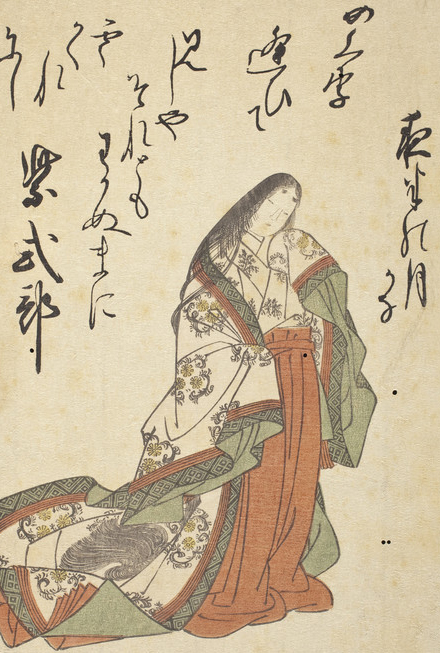
Book Review: The Tale of Genji, by Murasaki Shikibu

The Tale of Genji, which some might dismiss as a tale of serial rape, is in fact a Buddhist tragedy, in which the seducers are slaves to their desires, with miserable results.

Throughout this time Genji was constantly reminded of his separation from Oborozuki at the time when she became Consort of the Emperor Suzaku. She too was Lady-of-the-bedchamber; she too was carried away and locked up in a place whither it was impossible for him to pursue her. He remembered being very unhappy then, but nothing like so miserable as he was now. Was it that he was becoming more and more sentimental, he asked himself, or merely that the sufferings of the moment always seem more acute than those which we conjure up out of the past? But whether or no the miseries of today were really worse than those of yesterday, of this much he was sure, that from none of his divagations had anything but torment and agitation ever ensued. (pp. 586-587 of 1935 one-volume Arthur Waley translation)

It is inconceivable to me that any of the subject matter in this book is being treated dispassionately. Its author is surely acting as social critic. Lines such as “In this life rank is everything; it’s no use pretending the contrary” (p. 965) very effectively advocate the contrary. As for women’s issues,

“Girls without a father or brothers to protect them cannot expect to be treated with much consideration.” (p. 970)

“Perhaps her worst misfortune, poor soul, is to have been born a woman at all; for we none of us, high or low, seem to be given much of a chance either in this world or the next.” (p. 973)

“The Governor said that in the long run it was always the woman’s fault when such things happened.” (p. 1032)

naturally imply unfairness. That the author of Genji was a woman, or whether or not her work is “feminist,” makes no difference.

Otherwise, the most interesting aspect of the novel is the division of Genji’s personality between Kaoru and Prince Niou. The former inherits Genji’s sensitivity and the latter his rakishness, causing remarkable differences in performance.